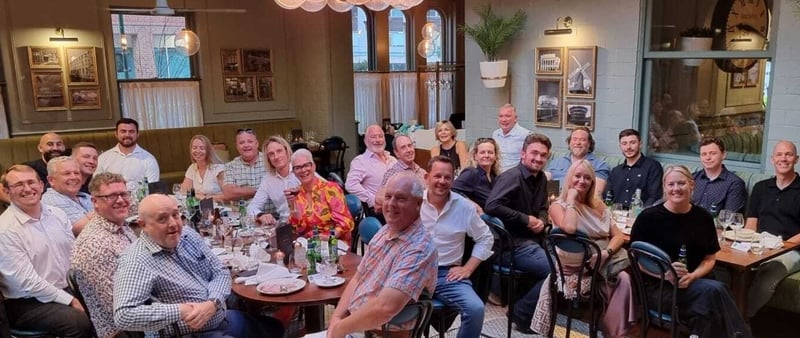
The CEA Members' Forum began the evening before with an informal gathering at Browns in Nottingham city centre, where drinks and good conversation were flowing ahead of the following day's meeting.
It was a relaxed opportunity for members, speakers and guests to catch up before the formal programme got underway.
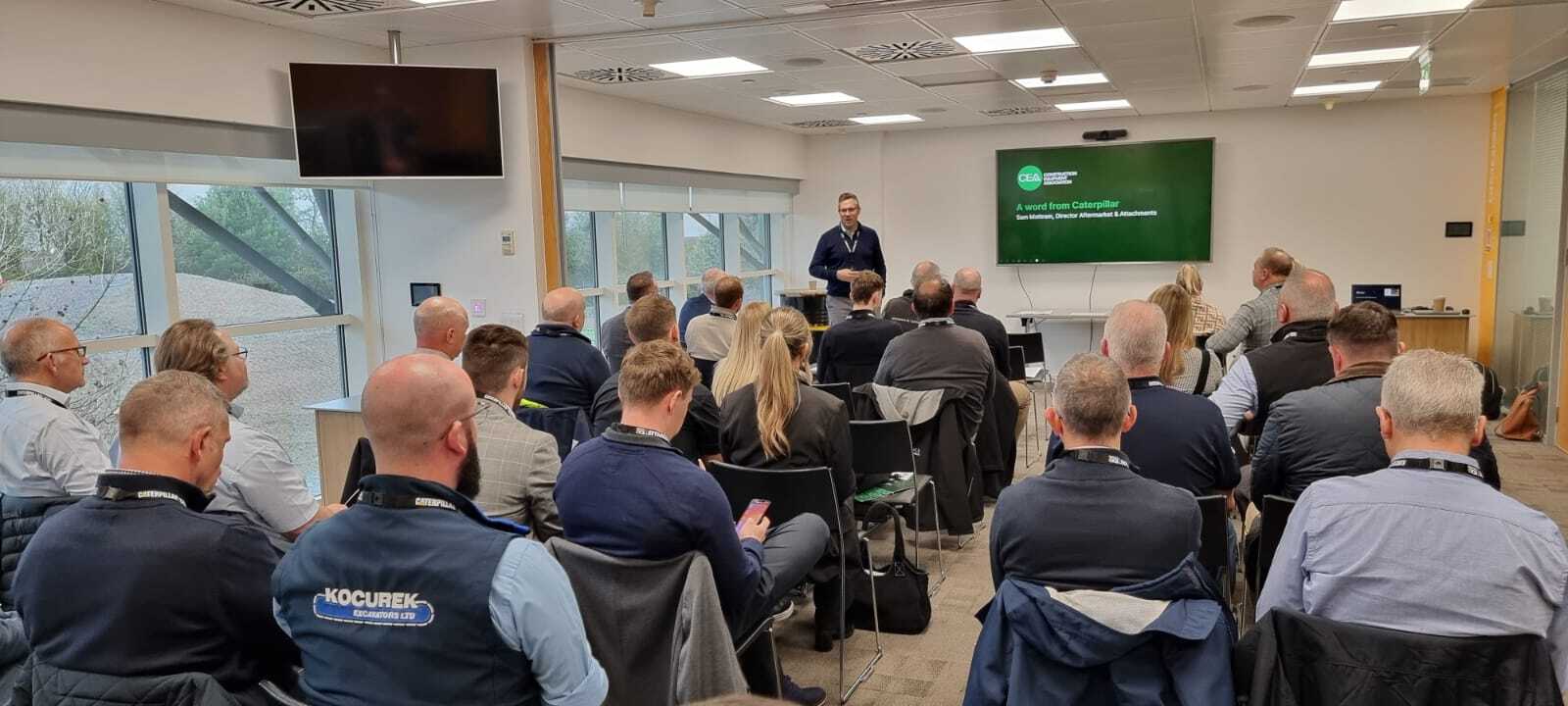
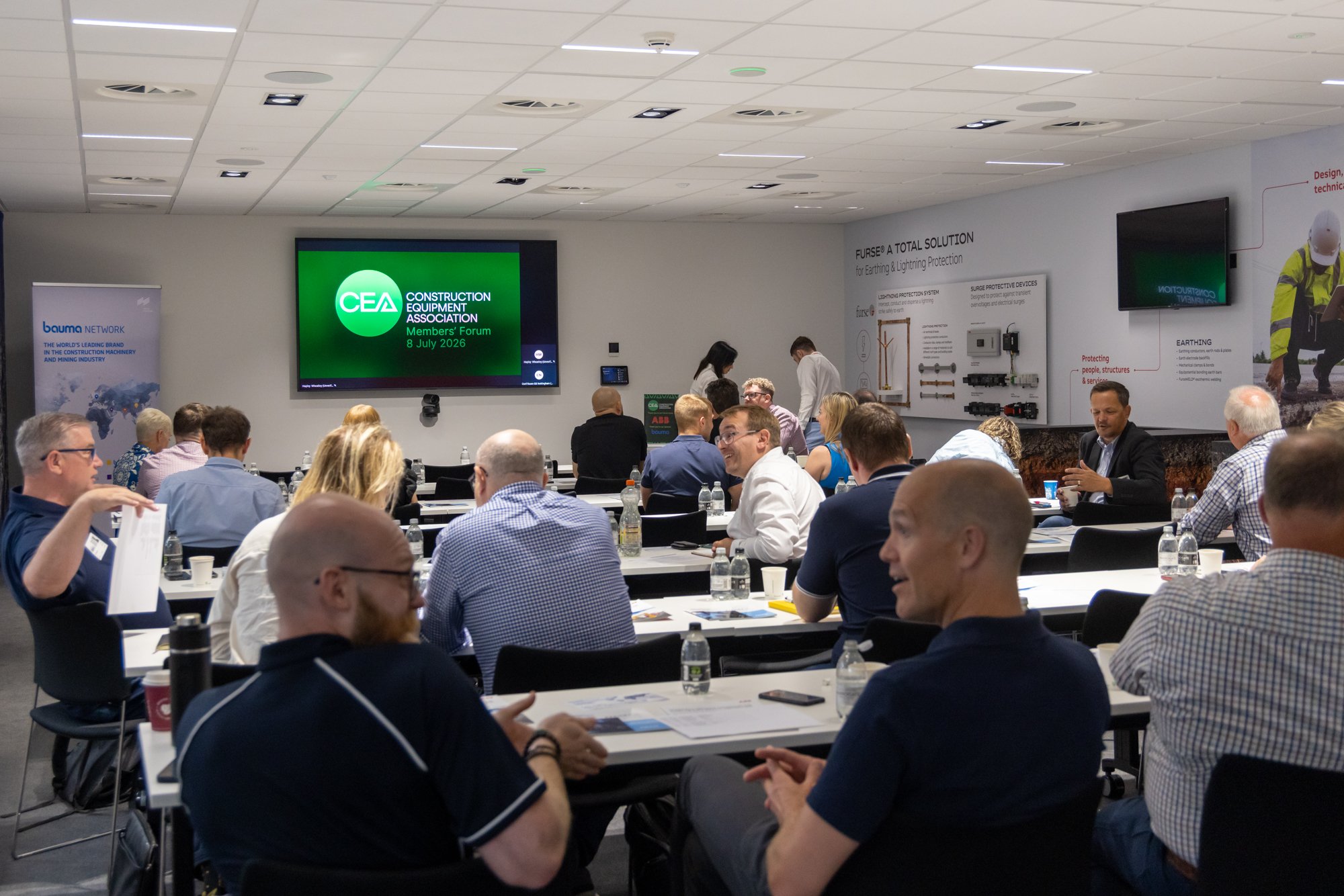
The Forum itself landed in the middle of another UK heatwave, with the temperature outside hitting a giddy 31°C. Host ABB's 100% electric facility on the outskirts of Nottingham kept the room mercifully cool and drew a strong mix of regulars and new faces.
The day covered machinery regulation, trade, market performance, international opportunities and where powertrains are heading next.
Viki opened by confirming that the PlantWorx Innovation Awards have now become the CEA Awards. The awards will run in conjunction with the 2027 PlantWorx event, with the ceremony taking place on the middle evening of the event, Wednesday 23rd June 2027 (ceremony venue tbc).
PlantWorx 2027 planning is moving fast, with indoor and outdoor space selling well and work underway on international pavilions, speaker sessions, a webinar programme and police training.
Viki said she had spoken with many members at Hillhead who had booked. All the feedback from site visits had been extremely positive, and she urged anyone who had not visited to do so.
Viki also covered members on a few team updates and news. Beth Abbott, CEA Head of Marketing, is due to return from maternity leave in mid-October, while Dave Luscombe, CEA’s CESAR Scheme Liaison, has taken on additional days working with Viki on commercial opportunities. David Waine, Managing Director of Con Mech Engineers, has also taken on the role of Volunteer Trade Advocate.
CECE Congress 2026 comes to London from 27 to 29 October, and more than half the tickets are already gone. Built around Create, Innovate and Inspire, the programme has Koorosh Shojaei, Jason Bevan, Samantha Rennison KPM, Professor Joe Nellis, Stephen Phipson CBE, Ann Watson and Stewart Hill confirmed to speak on creativity, innovation, economics, regulation, safety technology, skills and leadership through change.
Viki had originally worked up a nod to The Clash’s London Calling album cover for one of the presentation slides, before Beth pulled it on copyright grounds. The room clearly enjoyed the reference, even if it did not make the final cut.
The point behind it was more serious. Viki made it clear that CECE remains hugely important to the UK and to CEA members. The need for active involvement has increased in the last ten years with the CEA playing an active role on both the CECE Board and the General Assembly and chairing five technical committees.
A major part of the work CEA carries out on behalf of our members is ensuring UK regulatory alignment, thereby avoiding manufacturing complexity and the resulting increased costs in the GB market.
Recent CEA activity also got a proper round-up. KOMATEK in Istanbul saw a strong showing from familiar member brands, with the UK confirmed as Turkey’s third-largest import market for construction equipment, behind China and Japan. It was a useful reminder of the strength of the UK sector overseas and the value of maintaining those international relationships.
Hillhead was another real success, despite the hottest June days on record. With 54 CEA members exhibiting and many more attending, the event gave Viki a valuable chance to get out on the ground and see members in person. She managed to visit most of them too, which was no mean feat given the heat, the scale of the site and the amount of ground covered.
The Forum also gave members the chance to recognise a hugely deserved honour for Retired Superintendent Andy Huddleston, Head of NCATT, who received The King’s Police Medal at Windsor Castle on 24 June.
The award recognises Andy’s outstanding contribution to rural crime prevention and his long-standing efforts to tackle organised crime targeting agricultural and construction machinery. It was a proud moment for Andy, NCATT and the wider industry, and a fitting recognition of the real difference he has made.
Andy has now returned as Head of NCATT in a civilian capacity, continuing his fight against organised crime targeting our industry.
Members also heard that IPAF and the CEA signed a formal agreement at the IPAF Elevation event on 1 July, under which IPAF will promote the CESAR Scheme to its members. Viki said the timing was excellent, as the event itself focused heavily on tackling equipment theft and fraudulent hire. The NCATT team presented on the issue and later took part in a panel discussion.
Sam Mottram of Caterpillar UK gave the ERA (European Rental Association) update, with more than 18,000 rental companies represented across Europe, directly and through 17 national associations.
He looked back at the ERA Convention 2026 in Maastricht, held alongside the International Rental Exhibition and APEX, and ran through ERA's current priorities: transitions, sustainability and people.
Harry Wickham, Managing Director of Gate 7, backed Sam's view that it is a strong networking event, and particularly rated a session on shaking off the industry's "Dirty, Dangerous and Difficult" image.
The wider themes of digital transformation, electrification, AI adoption, rental as a circular business model, and attracting and keeping good people, including through the Women in Rental initiative, all came through strongly.
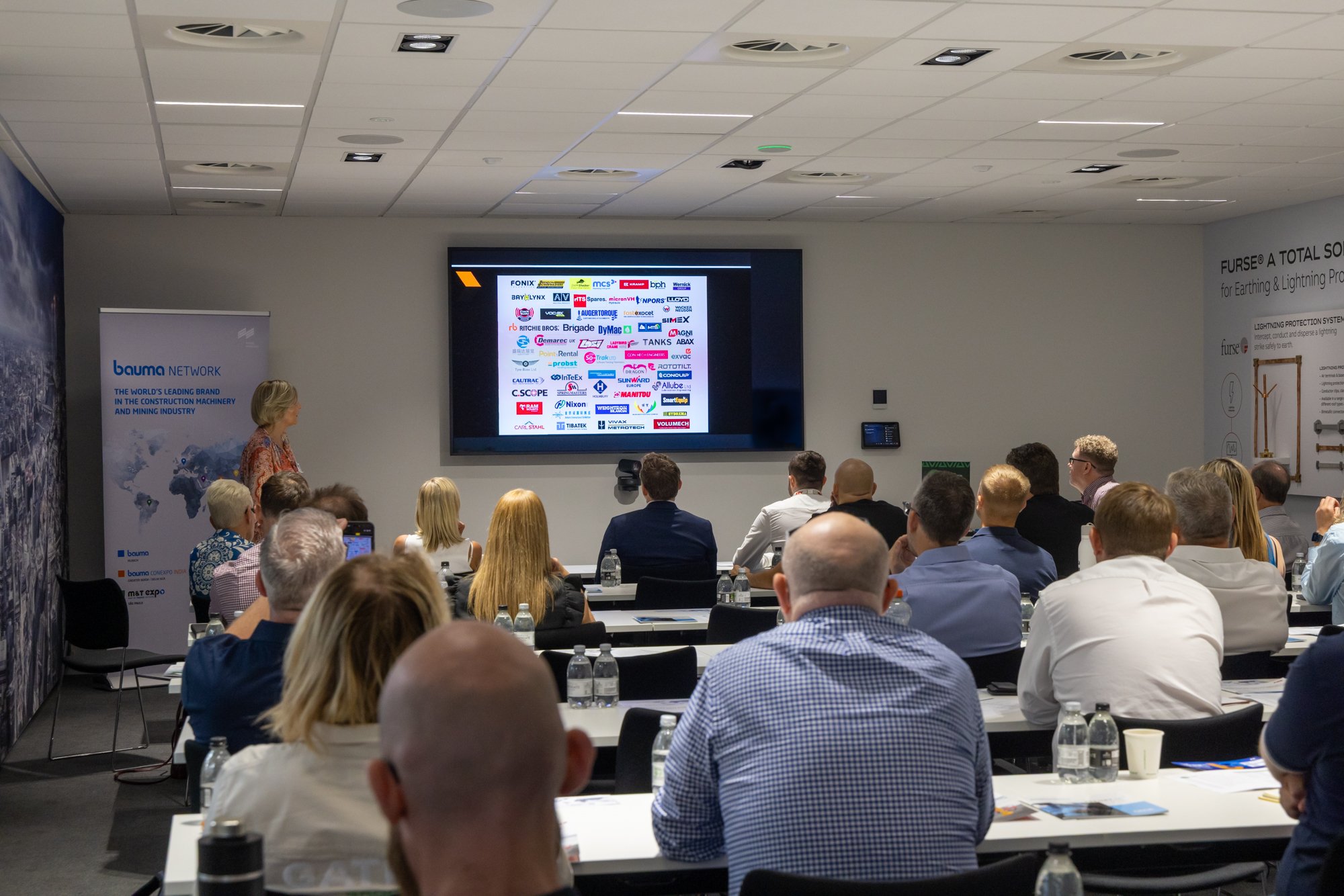
Paul Stoneman of Messe München UK talked members through the bauma Network, one global platform spanning five major construction equipment markets: Munich, Shanghai, India, Brazil and Saudi Arabia.
For UK companies, Paul said the network offers a real opportunity to build dealer relationships, meet customers and use established exhibitions to support export growth.
The CEA’s role in the UK Pavilion at bauma Munich was also highlighted, with the association giving UK manufacturers a strong collective presence at one of the world’s most important construction equipment events. Through the Pavilion, CEA members have a clear route to showcase UK innovation, meet international customers and partners, and do so with practical on-the-ground CEA support.
Plans for the 2028 Pavilion are already well underway, and the space is filled. Members were advised that if they would like to take part and have not already registered their interest, they should speak to Gill Stirk (gill.stirk@thecea.org.uk); she will do her best to accommodate them, but can't guarantee it.
Dale Camsell, CEA Senior Technical Consultant, took the room through the technical and regulatory update, with his usual dry humour keeping a dense agenda moving.
Declarations of Conformity are going fully digital from late 2028. Paper will not be accepted after that, and the Declaration must be accessible via a QR code or similar on the machine itself, remaining live online for the machine's expected lifetime or at least 10 years from the first sale, whichever is longer.
Cue a few raised eyebrows in the room, not least because QR codes are already one of the most abused formats for fraud. Dale’s point was that, as regulation becomes more digital, the industry needs systems that are secure, workable and understood by the people expected to use them.
He also reminded members that the CEA has real influence in Brussels. The association is not watching these discussions from the sidelines; it is actively involved, chairing five CECE committees and helping shape the technical conversations that matter to UK manufacturers.
Regarding the regulatory gap between the UK and the EU, Dale reminded members that, ever since the UK exit, conformity assessments from EU-recognised notified bodies are not accepted for UKCA, and conformity assessments from UK-approved bodies are not accepted for CE. However, UKAS is in the early stages of advocating for a mutual recognition agreement, which will benefit manufacturers.
There was good news on UK machinery regulation. The Department for Business and Trade is updating the UK version of the EU Machinery Regulation, and once published, it should allow CE-marked machinery to continue to be accepted in Great Britain from 20 January 2027, with UKCA requirements aligning with the EU rules from the same date.
It is a genuine CEA advocacy win, even if the timeline for getting it into law is tight.
Dale also flagged the Equipment & Machinery Industry Forum, the CEA-led platform for informal engagement with government, whose next meeting is due in October.
Westminster’s new Code of Construction Practice also prompted a significant reaction in the room. Dale explained that Westminster appears to have set out its own approach to NRMM requirements, separate from the wider Greater London Authority direction, and that this had come as a complete surprise to many in the sector.
Of particular concern was the timetable. While the wider London discussion has been working towards a 2040 zero-tailpipe ambition, Westminster’s Code appears to bring some expectations forward by as much as ten years. Dale stressed that the CEA is still working through the details and is seeking urgent clarification, including whether some of the dates in the document refer to planning permission submission requirements rather than final compliance deadlines.
The issue sparked a long list of questions from the room, not least around the practicalities of electrification. Members raised concerns about the infrastructure needed to charge electric plant on live construction sites, and the realism of the proposed timescales for contractors, hire companies, and equipment suppliers.
Dale confirmed that the CEA, working with other stakeholders, has already submitted a detailed document to Westminster containing more than 30 questions. The aim is to clarify what is being asked of industry, how the requirements will be interpreted, and whether the proposed timescales are workable in practice.
Next up was Daniel from Badger, one of the CEA’s newest members, who gave the room an introduction to the business, its approach and the results it is already delivering for the industry.
Daniel Ezzatvar, Managing Director of Badger Marketing, gave members a lively look at Badger's work with construction equipment businesses: route-to-market, product innovation, marketing foundations, events and exhibitions, and how to better connect with OEMs, plant hire, main contractors, distributors, and local authorities.
He shared a couple of standout launches, including the UK’s first electric telehandler, sold to Flannery, and some of the first solar-powered welfare units.
Daniel's message was clear: Badger is not "the colouring-in squad" or a "one-trick pony" — the agency's work goes well beyond making things look good, and is really about helping businesses communicate better, build credibility and win work. Went down well in the room.
David Waine, CEA Trade Advocate, presented his first trade update in his new role, covering steel tariffs and quotas, broader international measures, US tariff uncertainty, Middle East disruptions, shipping rates, and free trade agreements.
New UK steel import measures came in on 1 July. There are now 188 commodity codes under quota across 20 categories, quota capacity is down 51% on average, and the out-of-quota tariff has risen from 25% to 50%.
Government has partly listened to downstream concerns, but David wants to hear from any member seeing real supply chain disruption or cost spikes. This is key to enabling the CEA to collate and provide feedback collectively to the government.
The US, Canada, and the EU are all still adjusting their own steel tariffs and import restrictions, with more US decisions expected later in July.
Then came the Middle East slide. With major developments breaking overnight and the situation in constant turmoil, David acknowledged how quickly events were moving before taking members through the information available at the time.
Some shipping routes are recovering, but freight rates, insurance and transit times remain under pressure, and supply chains are not snapping back to normal any time soon. Asian ports are short of containers, bookings are running three to four weeks out, and EU-to-USA costs have jumped.
On the brighter side, the UK-India FTA lands on 15 July, cutting tariffs on Indian manufactured goods, including buckets, shovels and machine parts. The Gulf Cooperation Council deal was finalised on 20 May, the UK-South Korea deal was wrapped up in December, and the UK-EU economic pact is on hold until October. This section was new to the Forum and was very well received as highly valuable information.
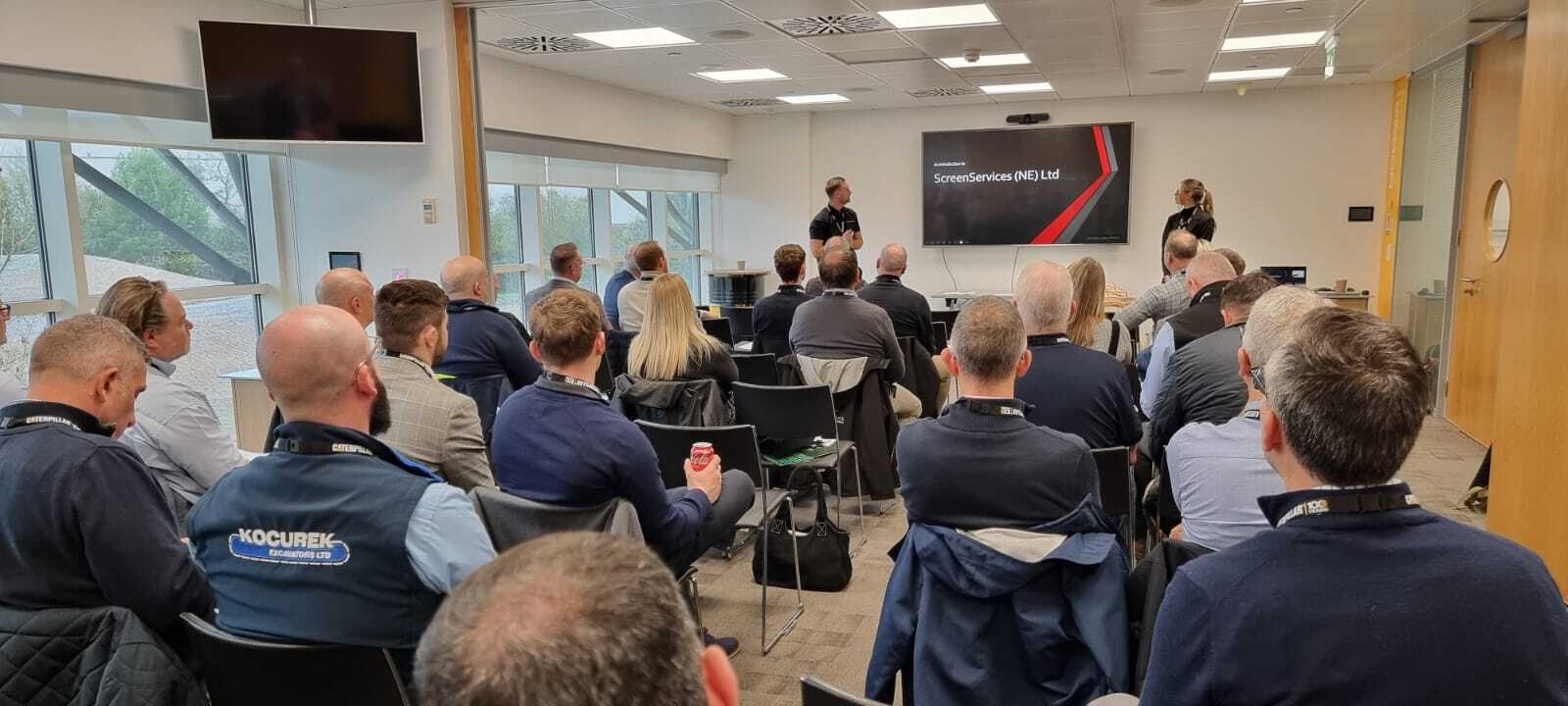
Before lunch, it was over to hosts ABB, with Luke Nolson and Jack Semmonds taking members on a whistle-stop tour of the company and the sheer breadth of its work. The pair also gave a well-earned thank you to Karl Blakesley for everything he had done behind the scenes to help ABB host the day.
Paul Lyons, CEA Market Insights Consultant, gave the afternoon UK market update.
Construction output grew for a fifth straight year in 2025, but only just, at 0.7%. Repair and maintenance propped up the figures while new work barely moved. Early 2026 improved a touch but was still 1.7% down on the same point last year.
The Construction Products Association now expects output to fall 2.5% this year, a big downgrade from an earlier forecast of 1.7% growth, with housing hit hardest as Middle East-linked uncertainty and rising costs knock confidence.
The Construction PMI backs that up. It dropped to 38.2 in May, the lowest in six years, with housebuilding the weakest spot.
Against all that, equipment sales are holding up better than expected. After a slow start, sales grew steadily and finished 4.2% ahead of last year over the first five months of 2026. Later in the day, Alex Woodrow of KGP shed some light as to why this may be.
That matched what members were reporting at Hillhead: steady growth, but subdued confidence in the back half of the year.
Wheeled loaders led the growth, mini and midi excavators, the biggest volume group, tracked roughly flat, and electric equipment sales picked up, likely helped by higher diesel prices linked to the Middle East conflict.
On trade, exports dipped slightly in 2025 and are still below the 2023 peak, although Q1 2026 was solid. Imports grew modestly in 2025 but jumped hard in Q1 2026 to their highest level since 2023.
Japan remains the top import source at 25% of Q1 tonnage, with China, Germany and France rounding out a top four that covers 61% of imports. Excavators remain the single biggest import at just over 43%.
The USA remained the top export destination, accounting for 25% of Q1 exports and recovering well from last year's tariff hit.
Alex Woodrow, Managing Director of KGP Powertrain Intelligence, closed out the daytime sessions with a 20-year sweep of the non-road mobile machinery market.
Comparing 2005, 2015 and 2025, Alex showed how far the market has shifted, from a pre-globalisation, diesel-only world to one shaped by emissions regulation, OEM consolidation, electrification and a growing wave of Chinese exports.
Global production has nearly tripled, from 1.74 million units in 2005 to 5.1 million in 2025, with many more OEM groups now in the mix.
Alex detailed the advancements in both engine and fuel technologies and how these have reduced emissions and increased machine productivity. This may go some way to explaining the apparently flat new equipment sales as machines work better for longer.
Looking ahead, Alex sees more consolidation, more electrification, near-zero-emission combustion technology, automation, and standardised charging infrastructure.
However, he was quick to knock down the idea that everything is heading one way electrically. HVO, e-fuels, biofuels and gas are all expected to remain part of the powertrain future.
The Forum was due to close with a global market update from Chris Sleight, Global Managing Director of Off-Highway Research. The video could not be played on the day due to a technical hitch. The CEA will share the video as part of the full slide deck, as always, post Forum.
Delegates were understanding and, with the heat still lingering outside, the prospect of an earlier finish did not appear to cause too much disappointment.
Viki Bell, Chief Executive of the CEA, said: "I was really pleased with the Summer Forum, many members have taken time to compliment the team on a very successful event. Of course, the Autumn Forum will not happen this year, and I look forward to seeing all our members at the much larger CECE Congress we are holding in London. Our thanks go to ABB for hosting us so well, and to bauma for their support as joint sponsor. Events like this rely on strong industry backing, and it was good to see so many members in the room and engaged in the conversation."
The day ended with a round-up and confirmation that the next CEA Members' Forum will take place in March 2027, kindly hosted by Kramp UK Ltd, in Biggleswade.
Photographs courtesy of : Definition Media and ABB