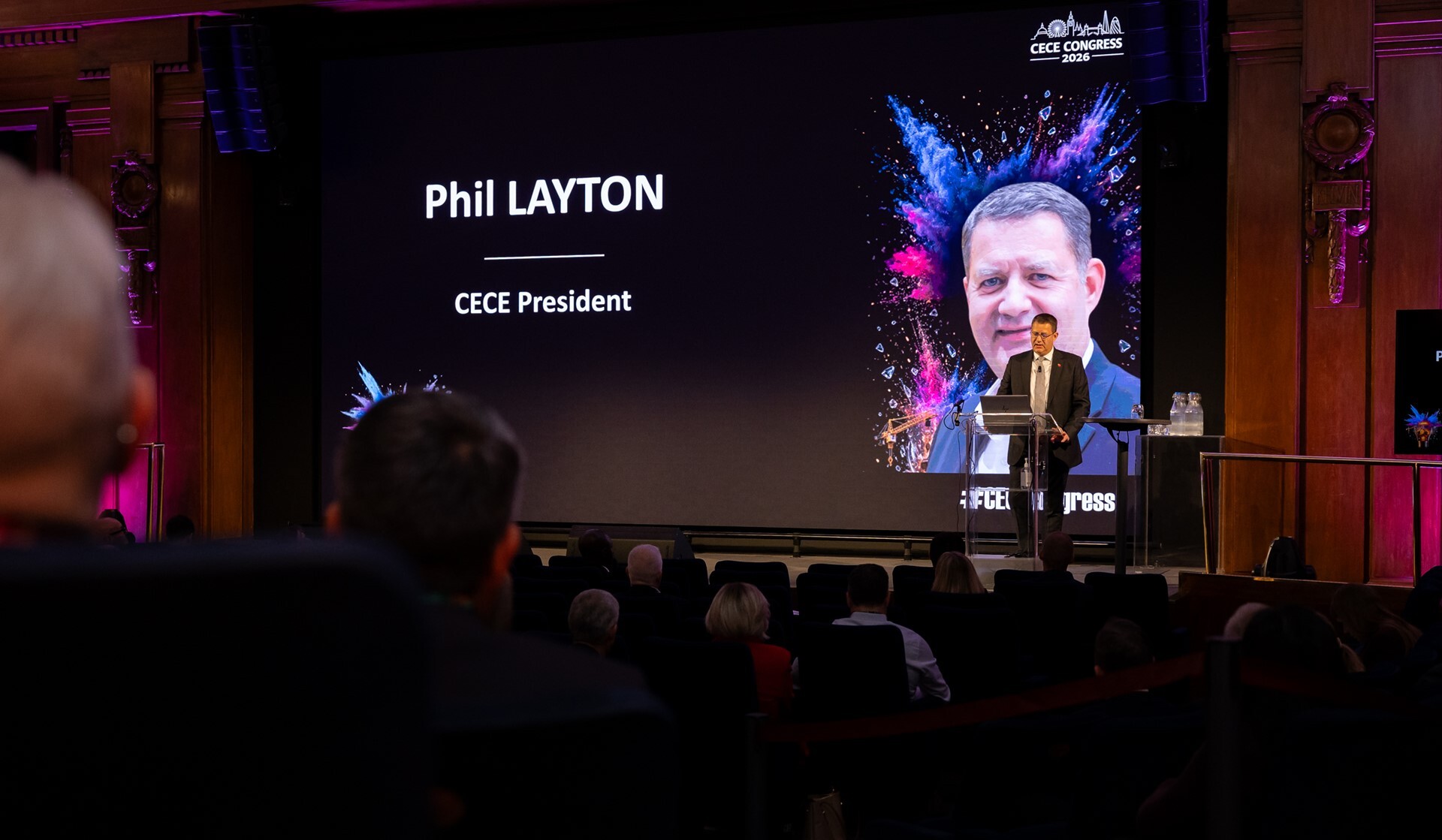
Under the theme “Create. Innovate. Inspire.” 200 delegates from all over Europe and the world gathered in London at the CECE Congress 2026 to examine economic trends, technological developments, resilience, leadership and workforce development. The two-day Congress also provided a platform to exchange ideas, build partnerships and develop a shared vision for the sector.
CECE calls for a stronger industrial policy
After the sharp market downturn in 2024, the European construction equipment sector showed signs of recovery in 2025 and continued confidence all along 2026. European manufacturers have continued to respond to economic uncertainty, supply-chain pressures and changing market demands through investment, innovation and adaptability. “Our message is clear: Europe needs a strong industrial base. It needs a competitive single market with proper market surveillance to ensure compliance and fair competition. European manufacturers need policies that support innovation, enable investment and strengthen global competitiveness,” said Phil Layton, CECE President in his opening speech. CECE will continue to work with European institutions, national associations and member companies to bring key policy files to a successful conclusion and ensure that the machinery sector’s needs are reflected in European decision-making.
With the Congress hosted by CEA (Construction Equipment Association, UK) in London, CECE also highlighted the importance of close EU–UK cooperation. In his welcome speech, Lord Richard Harrington, Chairman of Make UK, presented the views of the main UK organisation representing manufacturers on the evolving EU-UK relationship. He highlighted how the UK is a strong European industrial partner despite Brexit. Construction and mining machinery manufacturers operate globally and benefit from aligned technical requirements. CECE and the UK’s Construction Equipment Association will therefore continue to monitor policy developments and promote regulatory convergence across the Channel. A live poll during the event showed an overwhelming majority of attendees expecting a much closer industrial relationship between the EU and the UK in the next 5 years.
Human creativity and vision in a digitalising world
A series of inspiring speeches from creativity experts Koorosh Shojaei, automotive designer, Jason Bevan, former Head of creative development at Warner Bros. and Samantha Rennison, founder of The Experience Effect & former Chief Superintendent (UK Policing), explored creative thinking and how ideas can be turned into practical outcomes in the industry. The technical and economic forums examined safety and digitalisation, the global market outlook, equipment demand and financing, and closer industrial cooperation between India and Europe. Contributors included Simon Bailey of Safety Shield Global and DLL experts Maja Josifovska and Phil King.
A key challenge for the industry is attracting and developing young talent in an increasingly AI-driven world. A panel discussion on young people and career pathways brought together an international trio of apprentices and younger graduates from construction and manufacturing. Oliver Garnham from the UK (JCB), Ole Thomas from Germany (Kiesel Group) and Diana Novikova from Belgium (Agoria) presented their perspectives on these issues. In their words, companies should work more closely with schools and be more present on social media, to motivate young people by showing what manufacturing jobs really involve. The discussion concluded that the sector should challenge outdated perceptions and recruitment practices, and highlight the opportunities that youngsters have to help shape the industry. In a Mentimeter poll, the audience agreed that the construction machinery sector is not doing enough to engage the next generation.
In a closing inspirational keynote, former British Army officer and brain injury survivor, Stewart Hill, shared his personal story of rebounding from a life-changing war injury. He showed examples and practical tips to strengthen cognitive capabilities by continually reducing internal and external cognitive friction, enriching the brain and building collective strength. He emphasised that companies’ true competitive advantage comes from their employees’ minds, not AI.
CECE would like to thank all Congress Sponsors for making the event possible: JCB, ELITE Consultancy Network, Caterpillar, DLL, Safety Shield, CESAR, EZLEE, Plantworx, Trackunit and Aptean. We also extend our thanks to Congress’ Media Partners: KHL and Plant Planet.