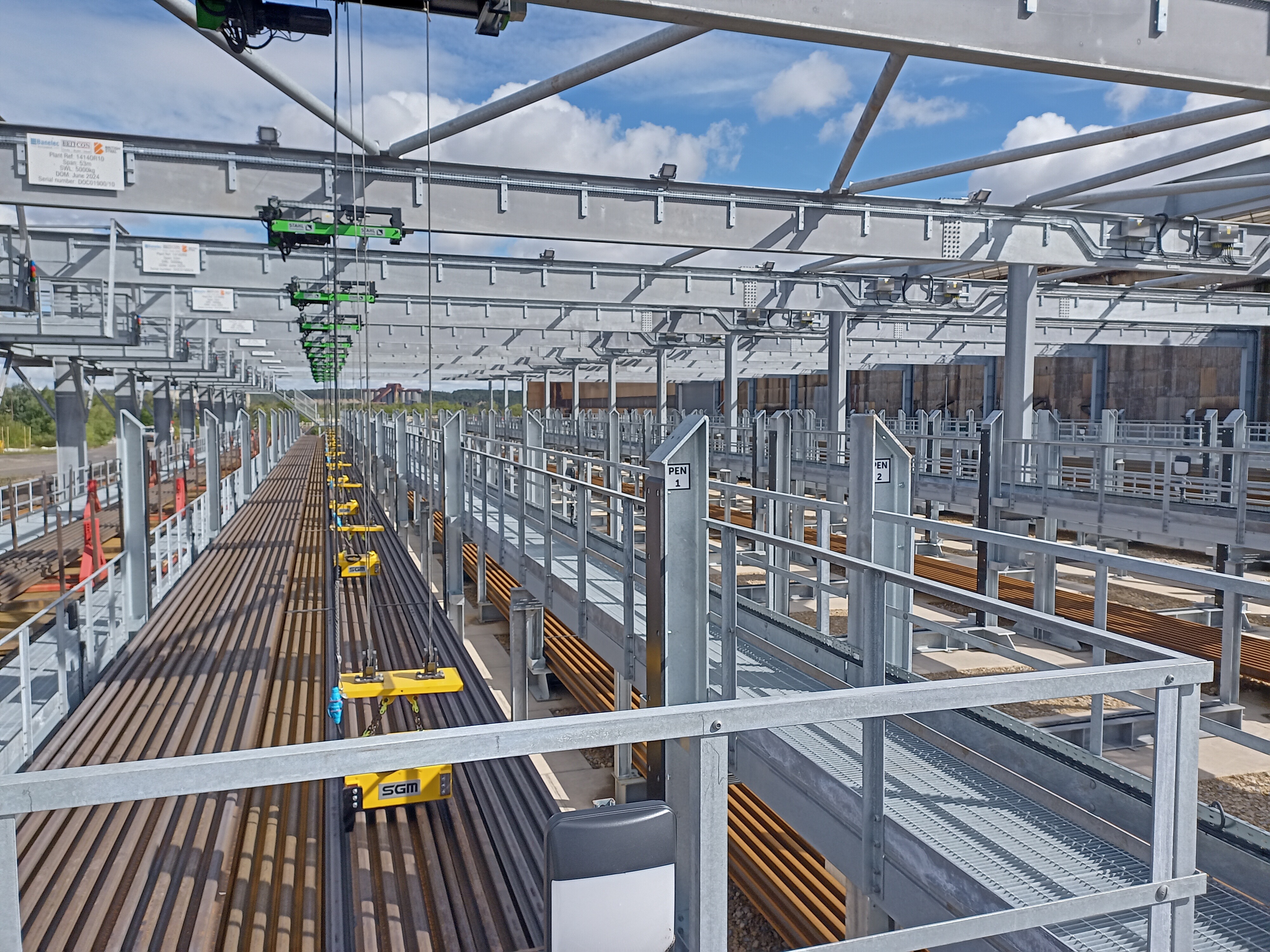
The Government has published its long-awaited UK Steel Strategy, setting out a plan to stabilise domestic production, attract investment and strengthen the role of steel in supporting infrastructure, manufacturing and defence.
At the centre of the strategy is a clear shift towards stronger trade protection. From 1 July 2026, new measures will replace the current steel safeguard system, reducing the volume of tariff-free imports and increasing tariffs on steel entering the UK above quota levels.
Under the new approach, import quotas will be cut by around 60%, with a 50% tariff applied to steel above those limits. The measures will apply across all trading partners, including countries with existing free trade agreements, and will focus on products that can be produced within the UK.
The changes follow ongoing concerns around global overcapacity, which has driven down prices and placed sustained pressure on UK producers. The Government has been clear that without intervention, the long-term viability of domestic steelmaking is at risk.
Alongside trade measures, the strategy confirms up to £2.5 billion of support to help modernise the sector, encourage private investment and accelerate the transition towards lower-carbon steel production.
The plan also sets out ambitions to increase the share of UK steel used domestically, particularly across major infrastructure and construction projects, while improving the overall business environment through energy cost support and procurement reform.
However, while the strategy signals strong backing for UK steelmakers, the tighter trade measures are likely to have knock-on effects across manufacturing supply chains, particularly for sectors reliant on imported steel.
Comment from Viki Bell, CEO, CEA (Construction Equipment Association)
“The UK Steel Strategy is a clear signal that government is taking domestic steelmaking seriously, which is important for construction and manufacturing.
The focus on tackling global overcapacity is welcome, but the new trade measures will have real implications for the wider supply chain. Many manufacturers rely on imported steel, and any reduction in availability or increase in cost will be felt quickly.
Getting the balance right will be key. We need to support UK steel production, but not at the expense of competitiveness across the sectors that depend on it.”
David Waine, Managing Director of ConMech Engineers and CEA Forum Leader, added:
"It is critical that the UK maintains a strong manufacturing base, and that starts with core industries such as steel. The Steel Strategy is a long‑awaited recognition of the importance of the UK steel sector, and it is encouraging to see the Government taking steps to support and strengthen the industry.
However, improving the competitiveness of UK downstream manufacturing will not be achieved through quotas, tariffs, and trade measures alone. The ongoing challenge of disproportionately high energy costs must be addressed if UK manufacturers are to compete on a level playing field.
It is also essential that policy considers the entire supply chain. There is a real risk that customers respond by sourcing finished components from lower‑cost countries, effectively bypassing quotas, tariffs, and CBAM altogether.
Without a joined‑up, whole‑supply‑chain approach, there is a risk that well‑intentioned measures protect upstream producers while undermining downstream manufacturing, resulting in the offshoring of value‑added production and jobs."
The Department for Business and Trade is gathering feedback on the new measures and their impact across manufacturing. If you have any comments, please send them to hayley.wheatley@thecea.org.uk, so we can represent the sector’s views in discussions with government.
Read the full UK Steel Strategy: https://www.gov.uk/government/publications/steel-strategy
.jpg)